
Maintaining a provincial highway network requires more than knowing where a truck is right now. Contractors and transportation agencies need a dependable account of road conditions, patrol activity, winter operations, material application, infrastructure deficiencies and completed work — across large service areas where cellular coverage is not always available.
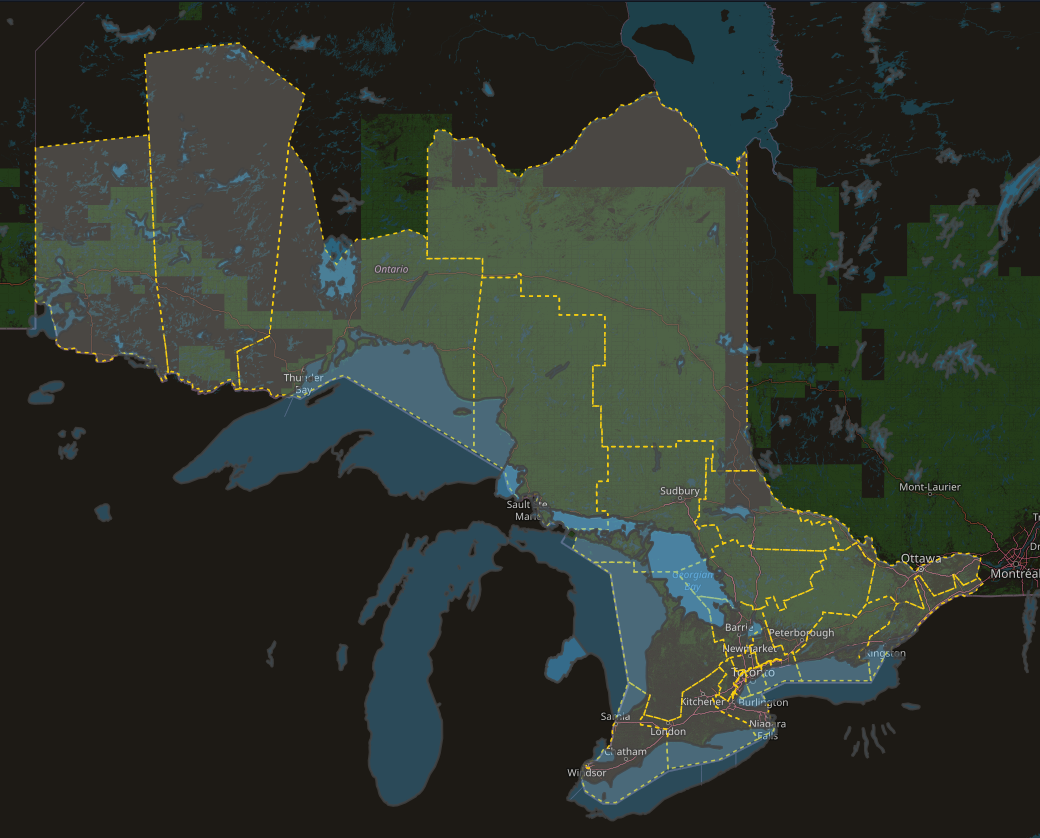
For more than 12 years, Lynxfield has provided data-collection technologies that help area maintenance contractors meet Ontario Ministry of Transportation requirements for automatic vehicle location (AVL), road patrol and work-management compliance. Today, the Lynxfield RMS platform is used across more than 10 provincial maintenance regions in Ontario, supporting the people, vehicles and records behind year-round highway maintenance.
One operational record across the maintenance region
Lynxfield RMS — the Lynxfield Road Maintenance System — brings multiple operational workflows into one connected environment. Instead of treating vehicle tracking, patrol, work management, images and materials as separate data sources, RMS keeps them associated with the route, equipment, event and time at which the work occurred.
That shared record can include:
- live and historical images of highway conditions;
- live and offline AVL/GPS history;
- snow-plow, patrol-truck and electrical-fleet activity;
- patrol observations and road deficiencies;
- infrastructure asset inspections;
- work assignments and completion evidence;
- salt, sand and liquid-material usage at the plow; and
- bulk-material measurements inside storage buildings.
For maintenance managers, the value is continuity. A route can move from patrol observation to assigned work, completion evidence and historical reporting without reconstructing the story across paper logs, radio calls and disconnected applications.
Live visibility with offline resilience
Ontario maintenance regions include rural highways, northern corridors and service areas where cellular coverage can be intermittent. Operations cannot stop when the signal disappears, and neither can the maintenance record.
Lynxfield-equipped snow plows, patrol trucks, electrical fleets and other road-maintenance equipment can continue collecting supported location and operational data while offline. When connectivity becomes available again, stored information can synchronize with the RMS platform.
This allows supervisors to use live information where networks permit while still retaining a continuous historical record from routes that pass through dead zones. The result is stronger operational visibility without treating constant cellular service as a prerequisite for reliable data collection.
Highway-condition images in operational context
Images are especially valuable when they remain connected to place and time. Lynxfield RMS can retain live and historical roadway images alongside vehicle location, route activity and maintenance records.
That context helps teams review:
- road and weather conditions encountered during a patrol;
- conditions before, during and after winter-maintenance activity;
- the location and timing of observed deficiencies;
- route progress during changing events; and
- the evidence available when an operational decision is reviewed later.
Rather than searching through an unstructured camera archive, users can work from an operational history tied to the highway network.
Material monitoring from the plow to the storage building
Material accountability is another important part of winter maintenance. RMS supports the tracking of salt, sand and liquid-material usage associated with plow operations, providing a clearer record of where and when material was applied.
At the storage level, Lynxfield can also measure bulk material inside salt domes and other storage buildings. Connecting application records with bulk inventory measurement gives operations teams a more complete view of material movement — from the building to the vehicle and onto the route.
This can support seasonal planning, contractor reporting, reconciliation and earlier identification of unusual usage or inventory discrepancies.
Deficiencies, asset inspections and field work through Lynxfield Mobile
Vehicle history is only one part of road maintenance. Crews also need to document signs, drainage assets, roadside infrastructure, pavement conditions and other deficiencies observed in the field.
The Lynxfield Mobile platform extends RMS into those workflows. Patrol and maintenance personnel can capture supported asset and deficiency information with location, notes, images and inspection details. Records can then support prioritization, assignment and follow-up work without requiring office staff to re-enter the field story.
This creates a connected process:
- Observe a condition or deficiency.
- Associate it with a location, route or infrastructure asset.
- Capture supporting images and inspection information.
- Prioritize and assign the required work.
- Record completion and retain the history.
For provincial maintenance contractors, that continuity strengthens both daily coordination and longer-term compliance reporting.
Historical evidence for compliance and liability review
Maintenance records often need to answer questions long after the shift is over. When was a route patrolled? Where was the plow operating? What conditions were captured? Was material applied? What deficiency was found, and what work followed?
Lynxfield RMS preserves historical fleet activity and related operational records that can be provided for MTO maintenance-compliance reviews, incident investigation and liability cases. GPS history, timestamps, route activity, images and supported material records help establish a clearer chronology of what occurred.
The system does not replace an organization’s policies, contractual obligations or legal process. It strengthens the underlying evidence by making operational records easier to retrieve, review and connect.
Supporting Ontario 511 and Track My Plow
Ontario 511 is the Ontario Ministry of Transportation’s bilingual traveller-information service. The ministry describes Track My Plow as a service that gives travellers current information about the location of winter-maintenance vehicles. Ontario 511 also provides public developer resources and API documentation for transportation data.
Lynxfield works with the provincial API integration used to send supported snow-plow operational data into Ontario’s traveller-information ecosystem. For participating equipment and maintenance operations, this helps move field data beyond the contractor’s internal system and into the public information services used by travellers.
This is an important distinction: the same underlying vehicle activity can support both operational management and public-facing winter travel information, provided it meets the applicable provincial integration and data requirements.
Experience beyond Ontario
The need for dependable maintenance data is not limited to one province. Lynxfield also provides 511 support for participating equipment in Alberta, where Alberta 511 includes snowplow and maintenance-vehicle information.
In British Columbia, Lynxfield works in several maintenance regions supporting Ministry of Transportation and Infrastructure operations. The specific workflows vary by contractor and region, but the underlying requirements are familiar: large service areas, mixed fleets, changing conditions, incomplete connectivity and a need for defensible operational history. Public traveller information is available through DriveBC.
Experience across Ontario, Alberta and British Columbia helps Lynxfield design systems around real regional maintenance operations rather than a generic fleet-tracking model.
Twelve years of supporting contractor compliance
Technology changes, but the operational questions remain consistent. Contractors must show that patrols occurred, routes were maintained, deficiencies were managed and required records are available when requested.
For more than 12 years, Lynxfield has focused on those practical requirements. RMS combines rugged field data collection, online and offline fleet visibility, images, patrol, work management, material monitoring and historical reporting in a platform designed for road-maintenance operations.
Across more than 10 Ontario provincial maintenance regions — and in transportation operations elsewhere in Canada — that experience helps contractors turn field activity into records that can support management, compliance and public service.
Review your regional maintenance workflow
Every maintenance region has its own routes, contract requirements, equipment mix, material processes, connectivity constraints and reporting responsibilities.
Contact Lynxfield to discuss how RMS can support AVL, patrol, winter operations, materials, mobile inspections, work management and historical reporting across your maintenance area.